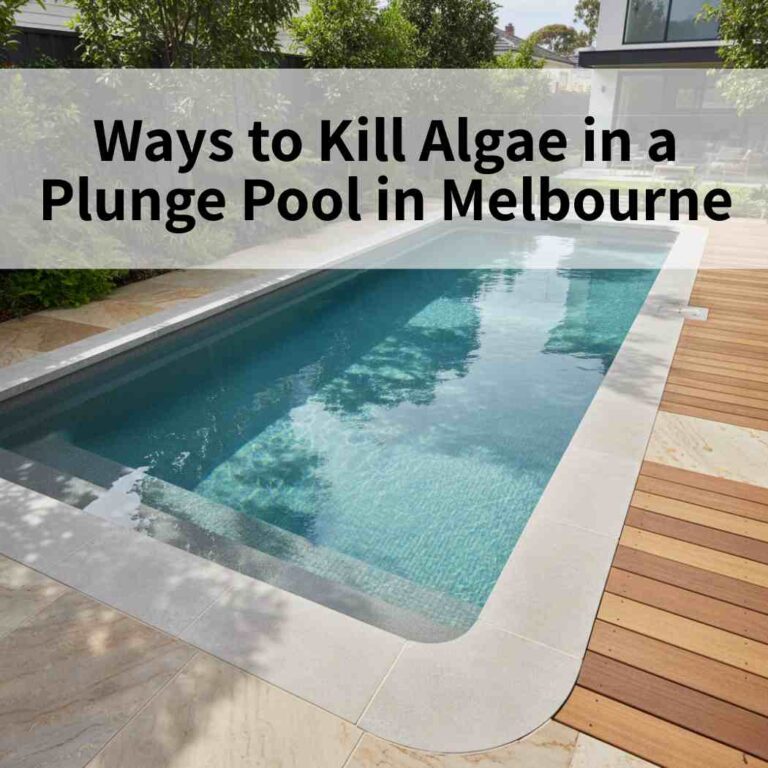
At Plunge Pools Melbourne, we see this daily. Our local team designs and maintains plunge pools built for Melbourne’s climate, helping homeowners stop algae before it takes hold.
In this guide you’ll learn what algae is, why it grows fast in small pools, the early warning signs, safe ways to remove it, and when to call a professional for help.
What is Algae?
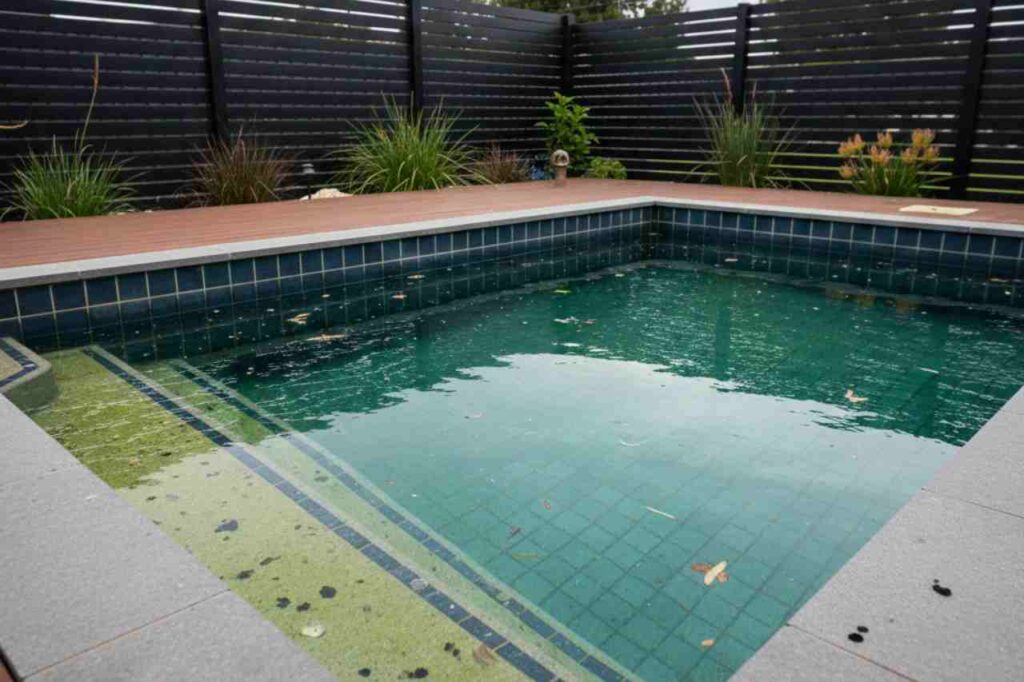
Algae are tiny, plant-like organisms that grow in water when light, warmth, and nutrients come together. In small plunge pools, where water volume is limited, there is less dilution of imbalance, allowing algae to spread faster than in larger swimming pools.
Why algae loves Melbourne plunge pools
Melbourne provides algae with a near-ideal environment.
Cool nights slow the activity of chlorine, reducing its ability to suppress algae. Warm daytime temperatures then restore energy to the water, creating a narrow window where algae can grow faster than sanitation can respond.
Many Melbourne plunge pools are positioned in shaded courtyards, side yards, or beneath trees. Fences and buildings block direct sunlight, removing the natural ultraviolet exposure that would otherwise limit algae growth.
Organic material completes the equation. Falling leaves, fine dust, pollen, and urban runoff introduce nutrients into the water. In a small backyard plunge pool, even a small amount is enough to tip the balance.
This is why plunge pool algae in Melbourne is not a sign of neglect. It is the predictable result of climate, design, and scale. Understanding this relationship is essential to effective algae prevention, targeted treatment, and long-term plunge pool water clarity.
Types of Algae in Melbourne Plunge Pools
Yellow (Mustard) Algae
What It Looks Like
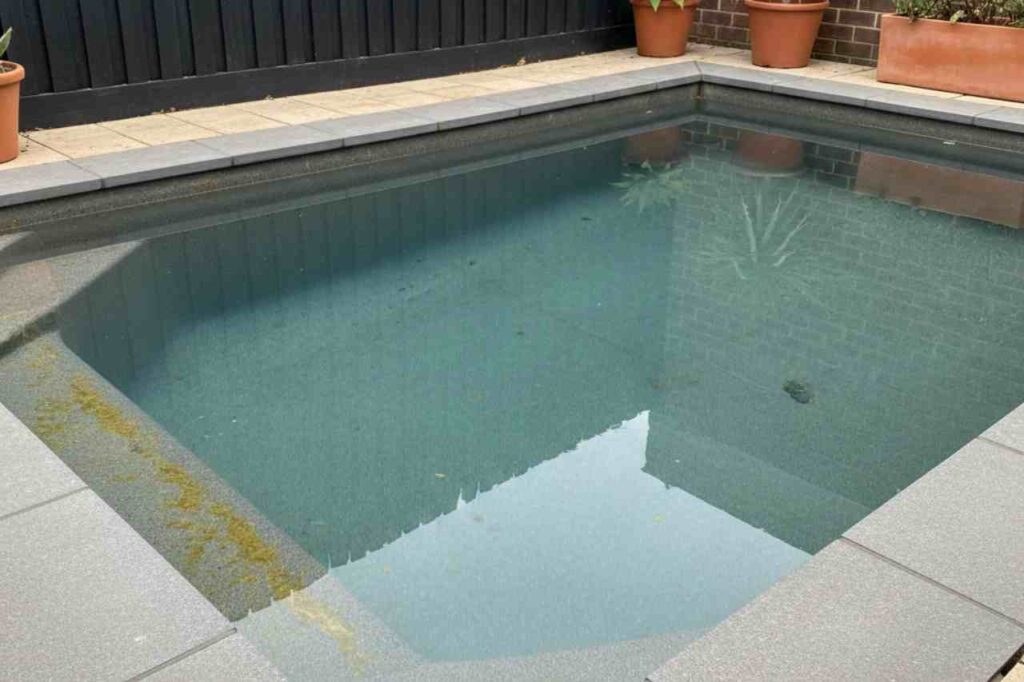
Yellow algae appears as fine yellow or brown dust that settles on pool walls, steps, and floors. It is often mistaken for dirt or pollen because it brushes away easily, only to return within days.
Where It Grows
Yellow algae prefers:
- Shaded walls
- Steps and ledges
- Low-circulation areas
- South-facing plunge pools common in Melbourne courtyards
It survives with less sunlight than green algae and resists normal chlorine levels.
How to Get Rid of Yellow Algae
Yellow algae requires a stronger approach:
- Brush every surface thoroughly, including behind steps
- Raise chlorine higher than normal shock levels
- Use a suitable algaecide designed for mustard algae
- Clean pool toys, brushes, and accessories, as algae can cling to them
- Run filtration continuously
If shaded conditions remain, ongoing preventative dosing may be required.
Black Algae in Concrete and Tiled
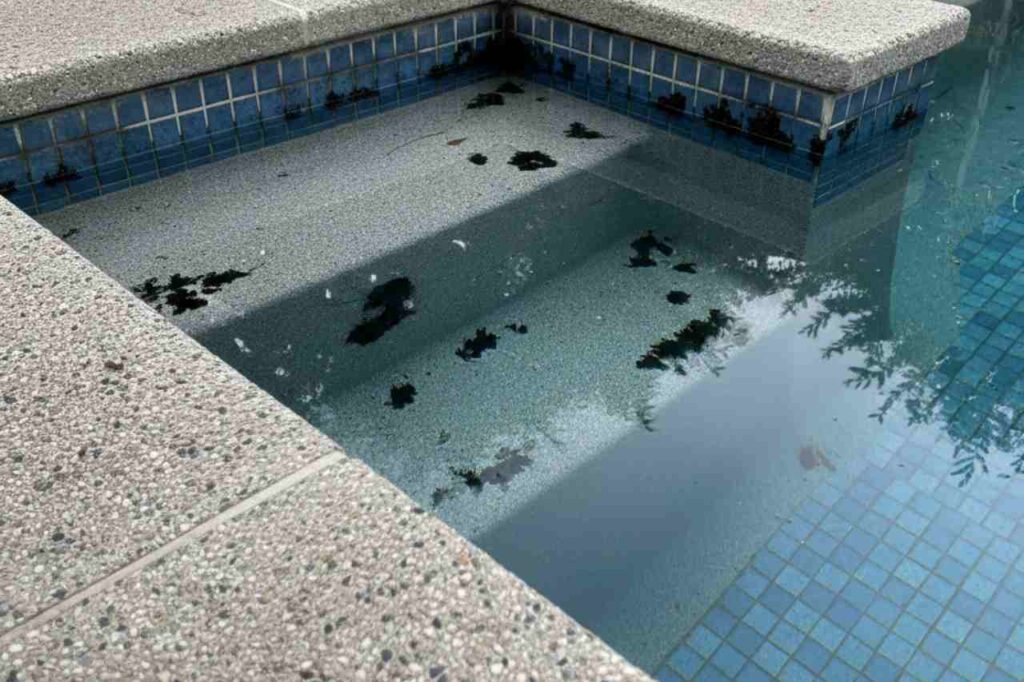
What It Looks Like
Black algae appears as dark blue-black or greenish dots embedded in pool surfaces. It does not brush away easily and often feels rough to the touch.
Where It Grows
Black algae anchors itself in:
- Concrete plunge pools
- Grout lines and joints
- Cracks, corners, and rough surfaces
It forms protective layers that shield it from chlorine.
Why It Is Hard to Remove
Black algae develops roots that penetrate porous surfaces. In plunge pools with concrete or tiled finishes, it can become deeply established before it is visible.
How to Get Rid of Black Algae
Black algae treatment is labour-intensive:
- Use a stiff stainless-steel or hard nylon brush (surface-appropriate)
- Break the algae’s protective layer by aggressive brushing
- Apply sustained high-strength chlorine treatment
- Brush daily during treatment
- Maintain filtration and clean filters frequently
Black algae often requires persistence. In severe cases, professional treatment may be necessary.
Pink “Algae” (Bacterial Growth)
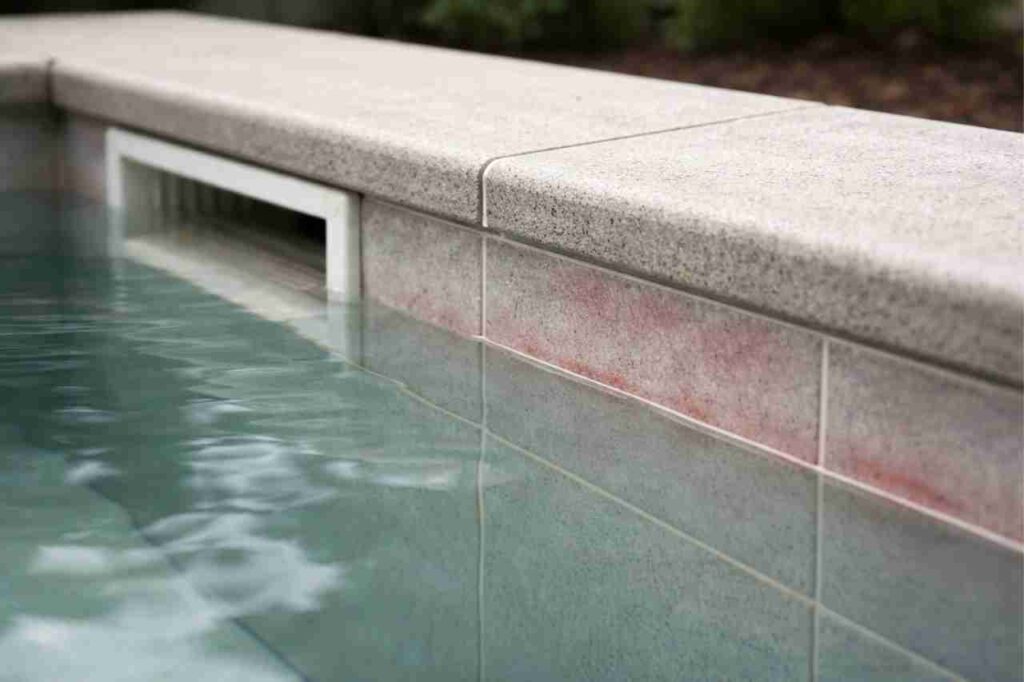
What It Looks Like
Pink growth appears as slimy pink or reddish residue, often along waterlines, corners, skimmer throats, and fittings.
What It Actually Is
Pink growth is not true algae. It is a bacteria that thrives in low-sanitiser environments and feeds on soaps, oils, and organic residues.
Where It Grows
Pink bacteria is commonly found:
- Around pool fittings and jets
- In corners and seams
- Inside pipes, filters, and ladders
- In warm plunge pools and spa-style pools
Why It Returns Easily
Because it lives in biofilms, pink bacteria can survive inside plumbing even when water looks clean.
How to Get Rid of Pink Bacteria
Effective removal requires full system sanitation:
- Disassemble and clean removable fittings
- Clean and disinfect the filter
- Shock with chlorine and maintain elevated sanitiser levels
- Brush all affected areas
- Avoid relying on algaecide alone
Without proper cleaning, pink bacteria often returns quickly.
Why Correct Identification Matters
Each algae type:
- Responds to different chlorine levels
- Prefers different environments
- Requires different brushing techniques
- Returns for different reasons
Treating yellow algae like green algae, or black algae like surface dirt, leads to repeat outbreaks. In plunge pools, repeated overdosing can damage surfaces, equipment, and water balance.
What are Early Warning Signs Before Water Turns Green?
Early warning signs of algae in a plunge pool include dull or cloudy water, slippery pool walls, and chlorine levels dropping quickly overnight
Watch for these clues:
- Water looks dull or cloudy
- Pool walls feel slippery
- Chlorine drops fast overnight
Acting early stops the outbreak and saves heavy chlorine shocks later.
What are the Main Causes of Algae?
Algae in Melbourne plunge pools is mainly caused by low or unstable chlorine, incorrect pH levels, poor water circulation, high nutrient load, and undersized or dirty filters.
These factors weaken sanitation and allow algae to take hold, even in well-maintained pools.
- Low or unstable chlorine – chlorine kills algae but weakens on cool nights.
- Wrong pH – too high or too low makes chlorine useless.
- Poor circulation – still corners let algae attach.
- High nutrients – leaves, dust, and fertiliser feed algae.
- Dirty or small filters – weak flow lets algae return.
Algae Treatment Safety Rules for Small Plunge Pools
Do Not Over-Shock a Small Plunge Pool
Over-shocking is one of the most common mistakes in plunge pool algae treatment. A small plunge pool requires far less chlorine to reach shock level. Adding too much chlorine can bleach pool finishes, fade tiles, damage fibreglass gel coats, and shorten the life of seals and fittings.
High chlorine levels can also cause:
- Strong chemical odours
- Eye and skin irritation
- Cloudy or milky water
- Premature wear on pumps and filters
Always calculate chlorine dosage based on the exact water volume of your plunge pool. In small pools, precision matters more than force. Accurate dosing kills algae effectively without harming the pool.
Never Mix Pool Chemicals Together
Mixing pool chemicals is dangerous, especially in confined plunge pool spaces. Combining chlorine with acids, algaecides, or other sanitising products can create toxic fumes or trigger violent chemical reactions.
Safe plunge pool algae treatment rules include:
- Add only one chemical at a time
- Allow full circulation before adding the next product
- Never pre-mix chemicals in a bucket
- Store pool chemicals separately and securely
In small plunge pools, chemical reactions happen faster and more intensely. Keeping treatments separate is essential for safety and water balance.
Do Not Swim Straight After Algae Treatment
After shocking a plunge pool or adding algaecide, the water is temporarily unsafe for swimming. Chlorine levels may be too high, and the water chemistry may be unstable.
Swimming too soon can cause:
- Skin and eye irritation
- Respiratory discomfort
- Damage to swimwear
- Increased chemical exposure for children and pets
Wait until:
- Free chlorine returns to safe swimming range
- pH is balanced
- The water is clear and odour-free
For small plunge pools, this recovery period can be shorter than large pools, but it should never be skipped. Always test the water before allowing swimmers back in.
Do Not Add “Extra Just in Case”
Adding extra chemicals “just to be safe” often causes more problems than it solves. In a small plunge pool, excess chlorine or algaecide can push water chemistry out of balance, making algae harder to control in the long term.
Overdosing can lead to:
- Chlorine lock
- Unstable pH
- Staining on surfaces
- Repeated algae outbreaks
Effective algae treatment in plunge pools relies on measured steps: test, adjust, circulate, and retest. Accuracy always beats force.
Why Safety Matters More in Small Plunge Pools
Small plunge pools respond quickly to change. This makes them efficient to treat, but also easy to damage. A single incorrect dose can undo the benefits of proper algae removal and create ongoing maintenance issues.
Safe algae treatment protects:
- Pool finishes and tiles
- Pumps, filters, and seals
- Swimmer health
- Long-term water clarity
When algae keeps returning despite careful treatment, it often indicates a deeper issue with circulation, filtration, or water balance rather than a lack of chemicals.
How to Choose the Right Chemical?
Use liquid chlorine for fast, precise sanitation without adding calcium, granular calcium hypochlorite only in carefully measured doses, and a non-metal algaecide like Polyquat to prevent algae from returning. In compact plunge pools, accuracy matters more than strength.
Liquid Chlorine: The Most Controlled Option
Liquid chlorine is often the best chlorine for small plunge pools. It dissolves instantly, begins working straight away, and does not add calcium or stabilisers to the water. This makes it ideal for Melbourne plunge pools where water balance can shift quickly after cool nights or sudden heat.
Because liquid chlorine is easy to measure in millilitres, it allows precise dosing. This reduces the risk of over-chlorination, surface damage, or strong chlorine odours. For plunge pool algae treatment, liquid chlorine gives fast results with minimal long-term side effects when used correctly.
Granular Chlorine (Calcium Hypochlorite): Use With Caution
Granular chlorine, often called cal-hypo, is powerful and effective, but it comes with trade-offs. Each dose adds calcium to the water. In a small plunge pool, calcium can build up quickly, increasing the risk of scale on tiles, fittings, and internal surfaces.
If cal-hypo is used, it must be measured carefully, fully dissolved before adding, and used sparingly. It is best reserved for specific situations rather than regular treatment. For many plunge pool owners, frequent use of granular chlorine creates more long-term problems than it solves.
Algaecide: Prevention, Not a Cure
Algaecide should not replace chlorine. Its role is to stop algae from returning after proper treatment. For small plunge pools, non-metal algaecides such as Polyquat are the safest option. They do not stain surfaces, do not add metals to the water, and are stable in chlorinated environments.
Polyquat algaecide works best after algae has been killed, when the water is balanced and filtered. Used correctly, it helps maintain clear water without increasing chemical load. Used incorrectly, or in excess, it can foam or reduce chlorine efficiency.
The Principle to Remember
Use only what is needed. Choose chemicals that suit small water volumes, avoid unnecessary additives, and prioritise control over power. In plunge pools, precision is the difference between clear water and constant problems.
Liquid Chlorine vs Calcium Hypochlorite
| Feature | Liquid Chlorine | Calcium Hypochlorite |
| Form | Ready-to-use liquid | Dry granules |
| Action | Works fast | Needs dissolving |
| Adds Calcium? | No | Yes |
| Best for | Small, shaded plunge pools | Larger pools with strong filters |
How Chlorine and Filtration Kill Algae
Chlorine kills algae by breaking down its cells through oxidation, brushing exposes algae so chlorine can reach it, and filtration removes the dead particles from the water. In small plunge pools, this repeating cycle is what restores and keeps water clear.
Chlorine: The Primary Algae Killer
Chlorine eliminates algae through oxidation. It attacks the cell walls of algae, breaking them apart at a molecular level. Once oxidised, algae can no longer grow or reproduce. This is why correct chlorine levels are essential for killing algae in plunge pools, not just for keeping water sanitised.
In small pools, chlorine works quickly, but it is also consumed quickly. Algae, sunlight, and organic debris all reduce free chlorine levels. This is why algae can appear overnight if chlorine drops, especially in shaded Melbourne plunge pools.
Brushing: Making Algae Vulnerable
Algae protects itself by clinging tightly to pool surfaces, especially in corners, steps, grout lines, and shaded walls. When algae is attached, chlorine struggles to reach it.
Brushing breaks this grip. It lifts algae from surfaces and suspends it in the water, exposing it directly to chlorine. In plunge pools, brushing is not optional. Because surfaces are close together, missed areas become rapid regrowth points.
Filtration: Removing the Dead Algae
Once chlorine kills algae, it does not disappear. The dead particles remain in the water, turning it cloudy or dull. This is where filtration becomes critical.
The pool filter captures dead algae as water circulates through it. In small plunge pools, filters can clog quickly during algae treatment, reducing flow and slowing cleanup. Regular backwashing or cartridge cleaning is necessary until the water clears fully.
Without proper filtration, dead algae simply recirculates and settles again, giving the appearance that treatment has failed.
The Continuous Algae-Removal Loop
Effective algae removal follows a simple but exact loop:
Brush → Chlorine → Filter → Clean Water
Brushing exposes algae.
Chlorine destroys it.
Filtration removes it.
Clean water restores balance and prevents regrowth.
Breaking this loop at any point allows algae to survive. Skipping brushing leaves protected algae behind. Weak chlorine fails to kill it. Dirty filters let it circulate back into the pool.
How to Clear a Cloudy Water After Treatment?
Cloudy water after algae treatment means dead algae is still suspended in the pool. Continuous filtration, correct use of clarifier or flocculant, and frequent filter cleaning are needed to fully remove it.
- Run the filter constantly.
- Add a clarifier for light cloudiness.
- Use flocculant for heavy dust, then vacuum slowly.
- Clean filters often to stop the debris cycling back.
Cloudy water means the algae is dead. The task now is removal, not killing. Continuous filtration, correct chemical support, and clean filters will restore clear water safely and efficiently
Filter Tips for Melbourne Plunge Pools
| Filter Type | Care During Algae Treatment |
| Cartridge | Rinse daily to keep flow strong |
| Sand/Glass | Backwash until water runs clear |
| All types | Watch pressure gauge – rising = dirty, falling = blockage |
Clean filters are your best defence against algae returning.
Surface Type and Algae Resistance
| Surface | Algae Resistance | Care Tips |
| Fibreglass | Smooth, hard for algae to stick | Use soft brush weekly |
| Concrete | Rough, holds spores | Use stiff brush + balance water |
| Old finishes | More porous | Re-coat or polish when worn |
What are Common Mistakes That Make Algae Return?
Algae returns in plunge pools when chlorine is incorrectly dosed, brushing is skipped, filters are left dirty, or seasonal changes are ignored. In small pools, consistency matters more than heavy chemical use.
Using Too Little or Too Much Chlorine
Chlorine must stay within a narrow working range to control algae. Too little chlorine allows algae to survive and regrow. Too much chlorine can damage surfaces, burn off quickly, and leave the pool unprotected soon after treatment.
In plunge pools, over-dosing is just as risky as under-dosing. High chlorine levels can bleach interiors, reduce chlorine stability, and create the false impression that stronger treatment equals better results. Accurate testing and measured dosing are essential for long-term algae control.
Skipping Brushing After Treatment
Brushing is often treated as optional. It is not. Algae clings tightly to walls, floors, steps, and fittings. If brushing is skipped, chlorine cannot reach algae hidden in textured surfaces or shaded corners.
In plunge pools, missed spots quickly become regrowth zones. Even when water looks clear, algae can remain attached below the surface, ready to bloom again within days. Regular, thorough brushing keeps chlorine effective and prevents algae from reattaching.
Ignoring Dirty or Blocked Filters
Filters do not just clean water; they remove dead algae after chlorine has done its job. When filters are dirty, clogged, or undersized, circulation drops and dead algae stays in the pool.
In small plunge pools, filters load up quickly during algae treatment. If cartridges are not cleaned or sand filters not backwashed, algae particles simply circulate and settle again. This leads to cloudy water, recurring blooms, and wasted chemicals.
Forgetting Seasonal Changes
Melbourne’s seasonal shifts catch many plunge pool owners off guard. Cool nights slow chlorine activity. Warm days encourage algae growth. Autumn leaf fall adds nutrients. Winter shading reduces natural algae burn-off.
Keeping the same routine year-round does not work. Chlorine demand, brushing frequency, and filter run times all change with the seasons. Ignoring these shifts allows algae to return even in pools that were previously stable.
Why Consistency Matters More Than Chemicals
The biggest mistake is inconsistency. Algae thrives when care becomes irregular, not when chemicals are weak. Small pools reward steady habits: regular testing, accurate dosing, routine brushing, and clean filters.
Consistency keeps water clear all year. Precision prevents the need for heavy treatments. When plunge pool care follows a stable routine, algae struggles to survive, no matter the season.
If algae keeps returning despite careful effort, it may indicate circulation limits, filtration issues, or environmental factors specific to the pool’s location. In those cases, targeted professional advice can stop the cycle and protect the pool long term.
How Long Does It Take to Kill Algae in a Plunge Pool?
The time it takes to kill algae in a plunge pool depends on how established the growth is. Light algae usually clears within 24–48 hours, moderate algae takes around 3–5 days, and heavy or black algae can take up to 7 days with consistent treatment.
| Growth Level | Typical Time |
| Light | 24–48 hours |
| Moderate | 3–5 days |
| Heavy / Black Algae | Up to 7 days |
Why Rushing Makes Algae Harder to Remove
Adding extra chemicals to speed things up often backfires. Over-shocking can damage surfaces, burn off chlorine too fast, and disrupt filtration efficiency. Dead algae still needs time to be filtered out, no matter how strong the dose.
Patience allows chlorine and filtration to finish the job properly. Clear water is not just about killing algae; it is about removing it completely.
What to Expect During the Process
Cloudy water during treatment is normal. It indicates algae is dying and being captured by the filter. Frequent testing, steady chlorine levels, daily brushing, and clean filters are what shorten the total treatment time.
The Key Takeaway
Algae clearance time depends on growth level, not effort alone. Follow the process, avoid shortcuts, and allow the system to work. In plunge pools, patience combined with precision delivers clear, stable water that stays algae-free long after treatment ends.
DIY vs Professional Algae Removal
DIY works when:
- Algae is light green
- Water tests are normal
- Filter flow is strong
Call a pro when:
- Algae returns often
- Black or mustard algae appears
- Water stays cloudy or chlorine disappears fast
Experts can test for hidden faults like blocked lines or weak pumps.
When to Shock, Brush, or Call a Pro for Algae in a Plunge Pool
Brush your plunge pool when walls feel slippery but water is clear, shock the pool when water turns cloudy and chlorine is low, and call a professional if black or mustard algae appears or algae keeps returning despite treatment.
| Pool Sign | Action |
| Slippery walls, clear water | Brush |
| Cloudy water, low chlorine | Shock |
| Black/mustard algae, repeat bloom | Call Pro |
How to Manage Algae During Melbourne’s Winter?
Algae slows down in Melbourne’s winter but never fully stops. Keeping a light chlorine level, running the pump a few times a week, brushing monthly, and using a cover to block debris prevents algae from taking hold and makes spring reopening easier.
- Keep light chlorine in the water.
- Run the pump a few times a week.
- Brush surfaces monthly.
- Use a cover to block leaves, not to skip care.
Small actions in winter make spring cleaning easy. Consistency now prevents frustration later.
Preventing Algae Long Term
✅ Keep chlorine 2–4 ppm.
✅ Brush weekly.
✅ Run filter daily, even off-season.
✅ Scoop leaves fast.
✅ Trim plants around the pool.
✅ Check water before holidays or shutdowns.
Steady habits beat algae every time.
Conclusion
Algae is a common challenge in plunge pools, but it is not inevitable. In Melbourne, algae growth is driven by shade, compact water volumes, and shifting weather patterns, not by poor ownership. Understanding these local conditions is the first step toward long-term control.
When a plunge pool continues to turn green despite regular care, support is available. Plunge Pools Melbourne specialises in plunge pools designed for local conditions. Our team understands algae behaviours, water chemistry, circulation, and filtration in compact pools, allowing us to solve problems at their source.
If you are unsure where to begin, or DIY algae treatment is no longer working, contact Plunge Pools Melbourne today.We offer local expertise, targeted algae removal, and ongoing plunge pool care to keep your water clear, safe, and ready to enjoy throughout every Melbourne season.
FAQS
1. Why does my plunge pool keep turning green even when I add chlorine?
Your plunge pool turns green because chlorine is not working effectively. This usually happens when pH is out of balance, circulation is poor, or algae is protected by shade and debris. In small Melbourne plunge pools, these factors overpower chlorine quickly.
2. How do I know if I should shock my plunge pool or just brush and rebalance it?
You should brush and rebalance when water is clear but surfaces feel slippery. You should shock when water turns dull, cloudy, or chlorine drops overnight. In plunge pools, acting early with brushing often prevents the need for strong chemical shock.
3. How long should it actually take to clear algae from a plunge pool in Melbourne?
Clearing algae from a plunge pool usually takes 24 to 48 hours for light growth, and up to 5 days for heavier algae. Shaded Melbourne pools may take longer because cool temperatures slow chlorine and filtration.
4. Why does algae keep coming back in shaded Melbourne plunge pools?
Algae returns because shade protects it from sunlight and slows chlorine activity. Melbourne plunge pools often sit in courtyards or side yards where leaves, dust, and poor circulation allow algae to survive and regrow even after treatment.
5. When is DIY algae treatment no longer enough, and when should I call a professional?
DIY treatment is no longer enough when algae keeps returning, black or mustard algae appears, or water stays cloudy after correct care. These signs point to circulation, filter, or design issues that require professional assessment and correction.