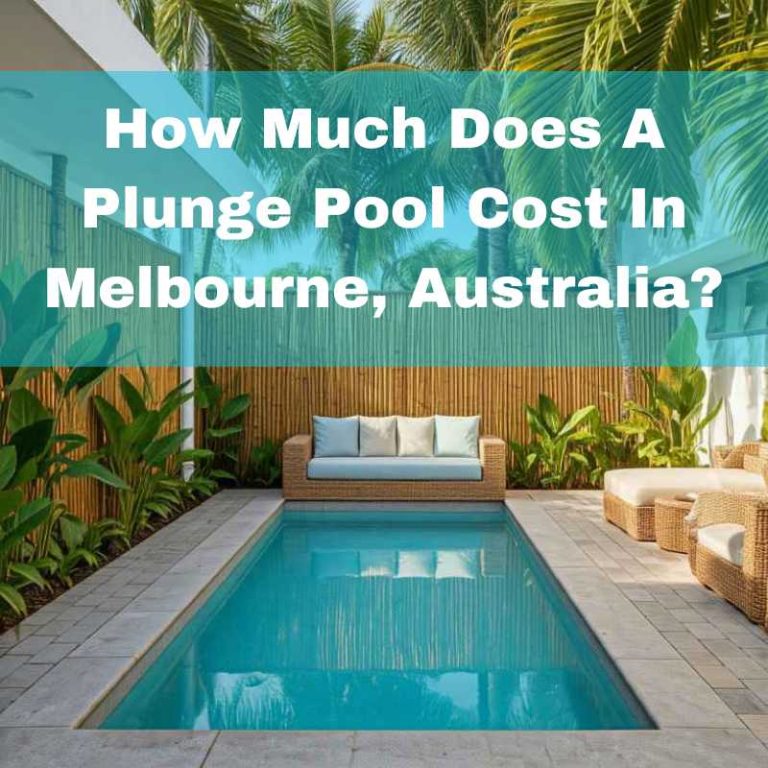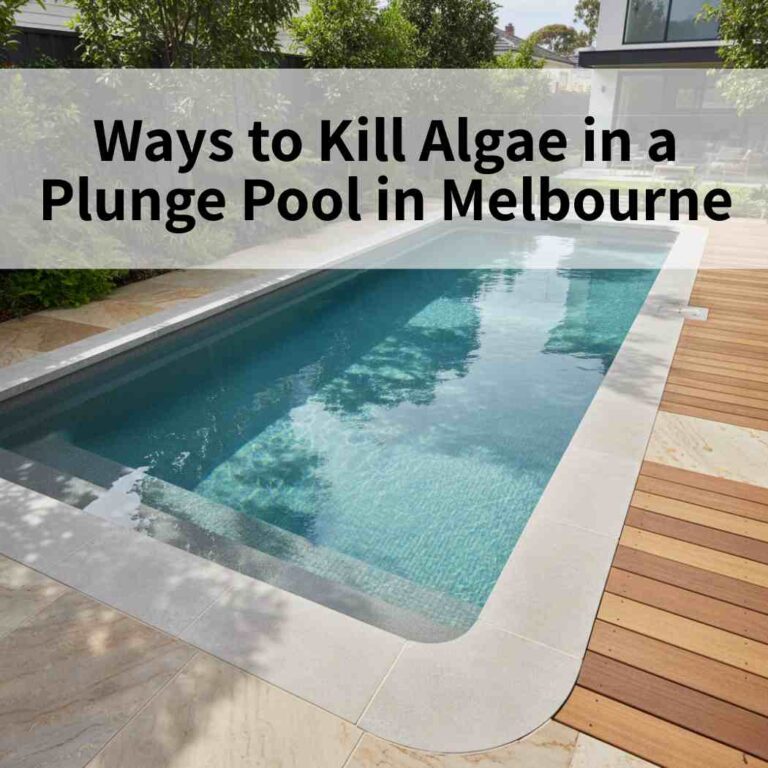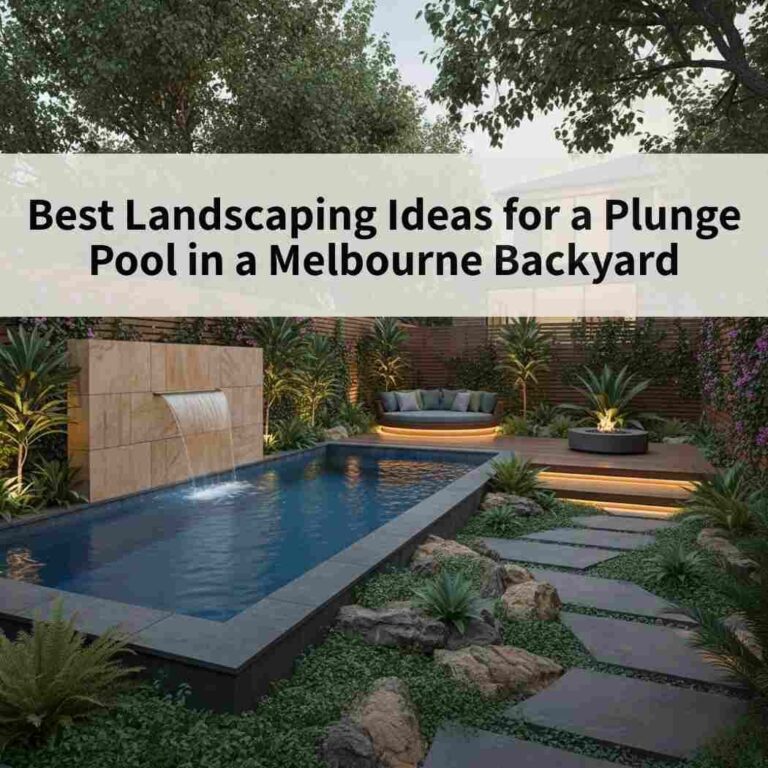
At Plunge Pools Melbourne, we’ve helped many homeowners across Victoria create refreshing retreats that suit their space and lifestyle. Our team guides you through every stage, from design and cost to installation and compliance, so your pool project runs smoothly from start to finish.
This guide covers what a plunge pool is, how much it costs in Melbourne, the typical installation process and timeline, required permits, and maintenance tips for Victoria’s climate.
What Is a Plunge Pool?
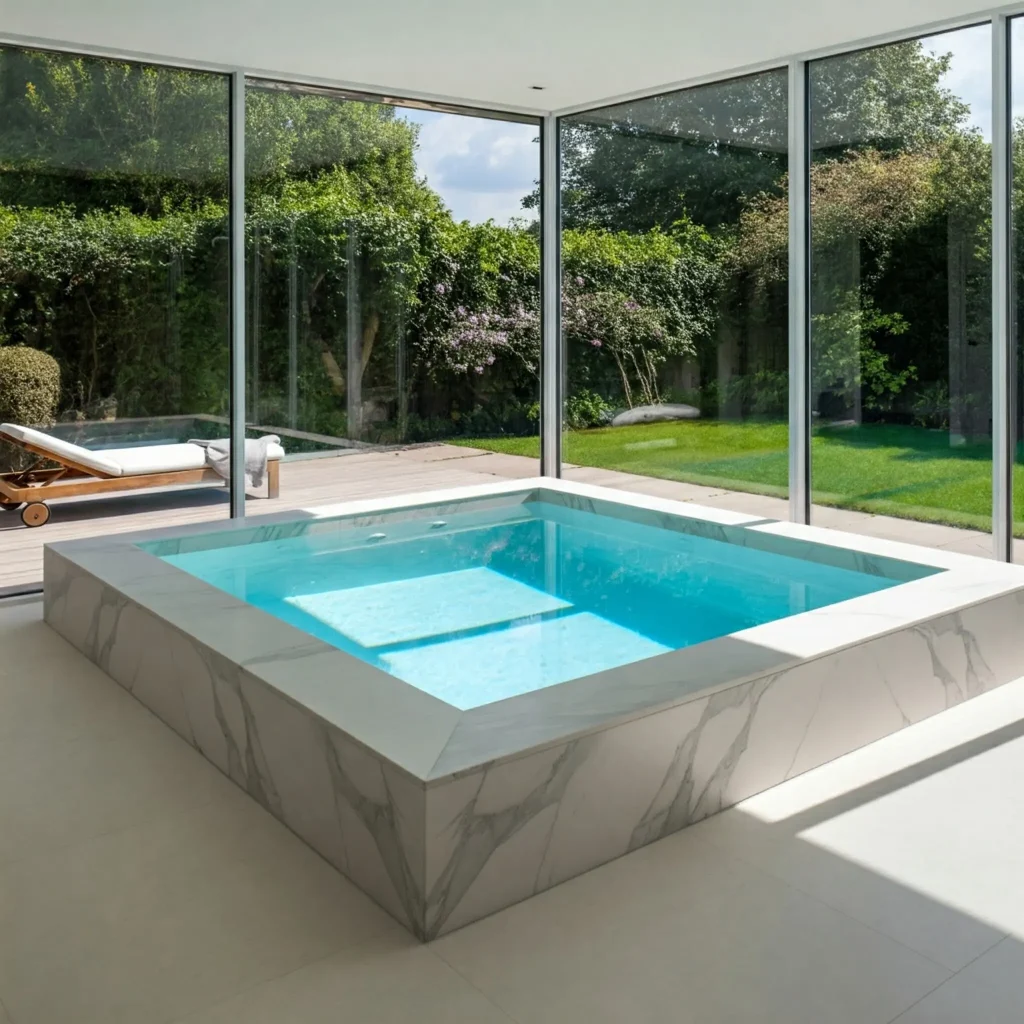
A plunge pool is a compact swimming pool built mainly for relaxation or gentle exercise. Most range from 2–7 metres long, 2–4 metres wide, and 1–2 metres deep — perfect for Melbourne’s small urban or suburban yards.
Because they’re smaller than standard pools, plunge pools are cheaper to heat, use less water, and are easier to maintain. Many homeowners add heaters for year-round comfort or leave them cool for summer refreshment.
Plunge Pool Sizes and Shapes
Plunge pools come in many sizes and shapes, and each one fits a different kind of Melbourne home. Because backyards across Victoria range from tiny courtyard spaces to wider suburban blocks, choosing the right size and shape helps your pool look balanced, feel comfortable, and work well with the layout of your outdoor area.
Best Sizes for Melbourne Homes
1. Small Plunge Pools (2–3 metres)
A small plunge pool of 2–3 metres suits tight courtyards and townhouses, where every bit of space matters. Even though the pool is small, it still creates a calm place to cool down on warm days. It also warms up faster, which is helpful in Melbourne’s cool winters.
2. Medium Plunge Pools (3–5 metres)
A medium plunge pool of 3–5 metres is the most common choice for suburban homes. It offers enough room to float, stretch, and relax, without taking over the whole yard. This size works well with modern outdoor living spaces and keeps heating and water use low.
3. Large Plunge Pools (5–7 metres)
A large plunge pool of 5–7 metres is best for bigger backyards. It gives you more space to move, almost like a small swimming pool, but still stays efficient and easy to maintain. Families enjoy this size because everyone has room to splash and play.
Popular Plunge Pool Shapes
1. Rectangular Plunge Pools
Rectangular plunge pools are the most popular shape in Melbourne. They fit neatly along fences, decks, and side boundaries, making them easy to landscape. Their clean lines also match modern home designs.
2. Square Plunge Pools
Square plunge pools are ideal for inner-city courtyards where space is limited on all sides. Their compact footprint works well in small homes, townhouse patios, and narrow gardens.
3. Round Plunge Pools
Round plunge pools bring a softer, more natural look to gardens. They suit older Melbourne homes, cottage-style spaces, and outdoor areas where curves help balance out sharp building lines.
4. Custom Plunge Pool Shapes
Custom shapes like L-shaped, oval, curved, or freeform designs are common with custom concrete plunge pools. These work well on tricky blocks, sloping sites, or yards with unusual layouts. Many homeowners choose custom designs to match their decking, outdoor rooms, or landscape features.
Plunge Pool vs Spa vs Swim Spa
When we look at a plunge pool, a spa, and a swim spa, we are really looking at three different ways humans try to create calm inside their own homes. Each one uses water in a different way. Each one gives a different kind of comfort. And each one fits into the space of a backyard the way a star fits into its place in the sky — with a purpose.
Plunge Pool
A plunge pool is the middle point. It is small, deep, and built for cooling off and relaxing. In Melbourne, many homes have small blocks, and a plunge pool uses space wisely. It gives you more room than a spa but still keeps the cost lower than a full swimming pool or a long swim spa.
Spa Pool
A spa, by contrast, is a small hot tub made for warmth and healing. The water is hot, the jets massage your muscles, and the seating wraps around you like a warm blanket. It is the best choice when you want hydrotherapy, quiet soaking, and a private place to relax after a long day.
Swim Spa Pool
A swim spa stretches these ideas further. It is long enough for stationary swimming, using strong water jets that push against you as you swim. You do not travel across the pool; instead, the water moves around you. This makes the swim spa perfect for fitness in small spaces, where a full lap pool cannot fit.
In the end, choosing between them comes down to how you want to use your water space.
- Pick a plunge pool for cooling, light swimming, and year-round comfort.
- Pick a spa for heat and hydrotherapy.
- Pick a swim spa for steady swimming and exercise at home.
When these choices match your home and your lifestyle, your backyard becomes more than a space, it becomes a small universe of comfort, sitting quietly in the busy world of Melbourne.
| Feature | Plunge Pool | Spa | Swim Spa |
|---|---|---|---|
| Water Temperature | Cool or heated | Hot | Heated |
| Size | 2–7 m long | 1–3 m | 4–6 m |
| Main Use | Relaxation, cooling off, light swimming | Hydrotherapy & warm soaking | Stationary swimming & fitness |
| Cost Range (Melbourne) | $32k–$65k | $10k–$25k | $40k–$80k |
| Best For | Small yards, all-year use, low running costs | Muscle relief, heat therapy, relaxation | Home fitness, steady swimming, limited space |
Plunge Pools vs Traditional Swimming Pools
A plunge pool costs less, installs faster, and fits smaller Melbourne yards. A traditional swimming pool is bigger, more expensive, and takes longer to build because it needs more digging, more equipment, and more ongoing maintenance.
Plunge Pool
A plunge pool is small and deep. It fits into the tight spaces you often find in Melbourne’s older suburbs. It needs less digging, less power, and less water. Because the pool is smaller, the energy that warms it spreads faster, the way heat spreads through a small planet more quickly than a large one. This makes a plunge pool easy to run and easy to enjoy all year round.
Traditional Swimming Pool
A traditional swimming pool is far larger. It needs a wide yard, long digging time, strong equipment, and a bigger system to keep the water clean. The construction takes months, not weeks. And because there is more water, more space, and more surface area, the pool takes more energy to heat and more work to maintain. It is made for long swims, laps, and big family gatherings.
If we think of space and cost as forces shaping your backyard, the plunge pool bends these forces gently. It keeps things simple, calm, and efficient. The traditional pool bends them much more strongly, creating a bigger commitment of time, space, and money.
In the end, the right choice depends on your life.
Choose a plunge pool if you want comfort in a small space, faster installation, and lower running costs.
Choose a traditional swimming pool if you have the room, the budget, and the desire for full-length swimming.
Both can bring joy, but they do it in different ways, just as different stars light the sky with different brightness.
Popular Plunge Pool Materials in Melbourne
Best material for Melbourne:
Fibreglass for fast installation and low maintenance.
Pre-cast concrete for a modern, durable look.
Custom concrete for full design freedom and complex backyard layouts.
Choosing the right plunge pool material is one of the biggest decisions Melbourne homeowners make, because it affects how your pool looks, feels, and lasts. Each material has its own surface texture, warranty, delivery method, installation time, and long-term maintenance needs, so it’s important to match the material with your space, style, and budget.
Below are the three main materials used across Melbourne and Victoria.
1. Fibreglass Plunge Pools (Fastest & Easiest)
A fibreglass plunge pool is like a strong, smooth shell formed in one piece. It arrives ready to be placed into your backyard, the same way a finished object arrives in orbit. Because it is light and already shaped, it goes into the ground quickly. Its smooth surface keeps water clean, and its long warranty makes it a safe choice for many Melbourne homes.
Key Features
- Surface Texture: Smooth and glossy; gentle on skin
- Delivery Method: Delivered by truck and lifted by crane
- Installation Time: 1–3 weeks
- Warranty: Often 20–30+ years on shell structure
- Installation Risks:
- Tight access may need a larger crane
- Soil movement may require a concrete collar
- Limited shapes because the shells are pre-moulded
Best For
- Small or narrow Melbourne backyards
- Homeowners wanting fast installation
- Low-maintenance lifestyle
- Suburbs with stable ground or clay soil that needs less curing time
2. Pre-Cast Concrete Plunge Pools (Modern, Strong & Stylish)
A pre-cast concrete plunge pool is like a small planet formed in a factory, cured and strengthened before it travels to your home. When it arrives, it is lowered gently into place. Its concrete body makes it solid and stable, and its modern look suits homes that want clean lines and simple beauty. It works well on sloped Melbourne blocks where strength matters.
Key Features
- Surface Texture: Smooth interior; can be tiled for a premium finish
- Delivery Method: Delivered fully formed; installed by crane
- Installation Time: 2–4 weeks
- Warranty: Highly durable with strong manufacturer warranties
- Installation Risks:
- Heavy unit requires clear crane access
- Delivery delays if access roads are narrow
- Ground must be level and well-drained
Best For
- Homeowners wanting a modern look
- Sloping blocks and tricky Melbourne layouts
- Faster install with a concrete feel
- Courtyards and architectural homes
3. Custom Concrete Plunge Pools (Full Flexibility & High-End Look)
A custom concrete plunge pool is built piece by piece on your land, like a structure formed slowly over time. The builders shape it, spray it, and finish it by hand. This gives you full control over the design. You can choose curves, corners, textures, colours, and tiles, the same way you might choose the features of your own small world. But because it takes longer to cure and finish, it requires more patience and planning.
Key Features
- Surface Texture: Can be tiled, rendered, pebble, or custom-finished
- Delivery Method: Built directly on your property; no crane needed
- Installation Time: 4–6+ weeks
- Warranty: Depends on builder; long life when built well
- Installation Risks:
- Longer build time due to curing
- High moisture clay soil needs stronger engineering
- More trades and steps increase project complexity
Best For
- Homes needing custom shapes
- Tight access sites
- High-end architectural designs
- Slopes, retaining walls, and difficult backyards
Plunge Pool Styles (Above, In-Ground, Semi In-Ground)
Most Melbourne homeowners pick in-ground or semi in-ground plunge pools because they suit clay soil, sloped blocks, and narrow backyards found across the city.
Melbourne homeowners can choose between three main plunge pool styles. Each style has its own benefits, installation needs, cost range, and ideal property type. The right choice depends on your block shape, soil type, backyard layout, and budget.
1. Above-Ground Plunge Pools
An above-ground plunge pool sits on top of the earth, like a small moon resting on a surface. It needs little digging, so it is fast to install. It works well in courtyards and tight spaces, and it avoids the risks that come with Melbourne’s clay soil. It is simple, quick, and good for homes that want less mess and less cost.
Key Features
- Sits fully above ground
- Minimal excavation
- Fast installation time
- Lower site preparation costs
Best For
- Tight access sites
- Townhouses, courtyards, and small blocks
- Melbourne homes with poor soil conditions where digging is risky
- Homeowners wanting a simple, low-disruption installation
Pros
- Fastest and most affordable
- No major earthworks
- Works well with decking and raised platforms
Cons
- Less “built-in” look
- May require extra cladding or retaining for aesthetics
2. In-Ground Plunge Pools
An in-ground plunge pool sits deep in the ground, the way planets sit in their stable orbits. It blends with the yard and looks clean and smooth. But because Melbourne has many areas with clay and reactive soil, it needs careful digging, engineering, and planning. When built right, it gives a premium, long-lasting look.
Key Features
- Pool shell sits fully below ground
- Requires excavation and soil preparation
- Best for stable soil or engineered ground
Best For
- Modern suburban homes
- Families wanting a permanent pool
- Yards with enough space for excavation
- Homeowners wanting a smooth, integrated backyard design
Pros
- Most premium and natural appearance
- Adds strong property value
- Safe and accessible for families
Cons
- Higher excavation cost
- Longer installation time on clay or reactive soil
3. Semi In-Ground Plunge Pools
A semi in-ground plunge pool is part above, part below; a balance between forces. This makes it perfect for sloped blocks and hilly suburbs like Eltham or Ferntree Gully. It needs less digging than a full in-ground pool but still feels like part of the land. It adapts to uneven ground the way a satellite adjusts its path around a tilted planet.
Key Features
- Half-raised installation
- Perfect for sloped blocks and hill suburbs
- Less digging than a full in-ground pool
Best For
- Areas like Greensborough, Eltham, Ferntree Gully, and other hilly suburbs
- Homes needing retaining walls
- Backyards with different height levels
- Homeowners wanting a modern or architectural look
Pros
- Great for clay soil and tricky backyards
- More affordable than a full in-ground pool
- Works well with decking and landscaping
Cons
- May need retaining walls
- Partial exposure means more visible sides
| Style | Cost Range | Best For | Notes |
|---|---|---|---|
| Above-Ground | $32k–$45k | Tight access homes, courtyards, narrow lanes | Fast install, no major digging, ideal for tricky Melbourne sites |
| In-Ground | $45k–$65k | Modern suburban homes wanting a clean, built-in look | More excavation; needs stable soil or engineered support |
| Semi In-Ground | $38k–$55k | Slopes, uneven blocks, hill suburbs | Top choice for clay soil, gradients, and split-level backyards |
Benefits of a Plunge Pool in Melbourne
A plunge pool is more than just a small pool. It is a smart way to use space, energy, and water especially in a city like Melbourne. When you place a plunge pool in a backyard, you are shaping how your home connects with the world around it, the same way planets shape their orbits in space.
Below are the most important benefits.
1. Perfect for Small Melbourne Backyards
Because the pool is small, it fits into tight Melbourne backyards where land is limited. It gives you the comfort of a pool without asking for the wide space that a full swimming pool needs. This makes it perfect for courtyards, side yards, and narrow blocks.
Why it matters:
- Works in courtyards, side yards, and narrow blocks
- Less digging and less disruption
- Still gives a premium outdoor look without taking over the whole yard
2. Saves Water and Energy
A plunge pool also uses far less energy. There is less water to heat, so the warmth spreads quickly, just like heat moving through a small star. This helps during Melbourne’s cold winters, where a large pool would lose energy fast. A plunge pool keeps warmth better and costs less to run.
Energy and water savings include:
- Smaller pumps and filters mean lower power use
- Less evaporation due to smaller surface area
- Less water needed to fill or top up the pool
- Cheaper to maintain year-round
This makes a plunge pool an energy-efficient choice that suits Melbourne households watching water and electricity costs.
3. Faster and Cheaper Heating
Melbourne’s weather can jump from hot to cold in a single day. A plunge pool works well with this kind of climate. It cools you on hot afternoons and warms quickly when the nights are cold. With solar heating or a heat pump, it becomes a year-round retreat.
Plunge pools warm up much faster because:
- They hold less water
- They use efficient inverter heat pumps, solar heating, or gas
- They retain heat better when combined with pool covers
This makes year-round swimming far more affordable compared to heating a full-size pool.
4. Easy to Maintain
The water stays cleaner too. With less volume, the chemicals work faster, the filter runs for shorter periods, and maintenance becomes simple. For busy homeowners, this means less time cleaning and more time enjoying the water.
Maintenance benefits include:
- Quicker water balancing
- Faster filtration cycles
- Less debris to clean
- Lower annual maintenance cost (usually $600–$1,200)
For busy Melbourne homeowners, this is one of the biggest advantages.
5. Works Well With Melbourne’s Climate
Victoria’s weather can swing from hot days to cool nights. A plunge pool handles these changes better than a large pool.
Climate-related benefits:
- Less heat loss in winter
- Easier to cool off in summer
- Perfect for short dips during hot spells
- Works well with solar heating during sunny months
The pool becomes usable across more seasons, making it a great fit for Melbourne’s unpredictable weather.
- Saves space
- Uses less water
- Cheaper to heat
- Easier to maintain
- Great for relaxation
- Adds value and appeal
- Works in small urban yards
A well-planned plunge pool can increase property value by up to 7 percent in some Melbourne suburbs.
6. Adds Value and Appeal to Your Home
And because the pool is small, it adds value without overwhelming the yard. It becomes a calm, quiet place to relax, a small centre of peace in a busy city.
Benefits include:
- Stylish, compact design
- Increased outdoor living appeal
- Strong return on investment in many Melbourne suburbs
A good plunge pool setup can increase property value by up to 7%, depending on location and design.
7. Great for Relaxation and Wellness
Plunge pools are designed for comfort perfect for winding down after work, gentle exercise, or cooling off on hot days.
Relaxation benefits include:
- Hydrotherapy options with jets
- Ideal depth for cooling dips
- Quiet space for stress relief
- Great for families, couples, and downsizers
Many homeowners treat their plunge pool like a personal retreat.
Advantages and Disadvantages Of Plunge Pools
A plunge pool has strengths and limits, much like everything in the universe. Some things it does extremely well. Others are outside its design, the same way a small star shines brightly but cannot become a giant.
Advantages of Plunge Pools
- Perfect for small yards and compact blocks
- Low maintenance for busy homeowners
- Lower installation and running costs
- Heat faster in Melbourne’s climate
- Great for relaxation & hydrotherapy
- Many customisation options
- Adds value without taking up space
Disadvantages of Plunge Pools
- Not suitable for long-distance swimming
- Smaller internal space
- Some models need crane access
- Custom designs cost more
How Much Does a Plunge Pool Cost in Melbourne?
In Melbourne, most plunge pools cost between $32,000 and $80,000, but many families end up in the $45,000 to $65,000 range. This is because Melbourne has narrow blocks, clay soil, and older neighbourhoods where access is tight. A crane may be needed to lift the pool into place, the same way a spacecraft needs help reaching its orbit.
A small plunge pool needs less water and less concrete, so the cost stays low. But if the soil is reactive clay or full of rock, the digging becomes harder, and the price rises. Heating also changes the total. A plunge pool warms quickly because it holds less water, the same way a small planet heats faster than a large one. But adding a heat pump, solar system, or jets increases the final cost.
Each upgrade such as lights, tiles, water walls, deeper shells, adds detail, beauty, and value, but it also adds weight to the total price. Compliance and permits also play a role, guiding the project the way rules guide the motion of stars.
In the end, the cost of a plunge pool is not just a number. It is a balance between space, design, soil, access, and the way you want your backyard to feel. When these forces align, the plunge pool becomes a calm, efficient, and beautiful part of your home, shaped perfectly for Melbourne’s lifestyle and climate.
| Type | Typical Price Range | Notes |
|---|---|---|
| Above-Ground Fibreglass | $32k–$45k | Fast installation with minimal digging; ideal for tight access homes |
| In-Ground Fibreglass | $45k–$60k | Popular suburban choice; smooth finish and low maintenance |
| Pre-Cast Concrete | $50k–$65k | Delivered fully formed; modern, durable look; crane access often needed |
| Custom Concrete | $65k–$80k+ | Built onsite for complete design freedom; best for sloped or tricky blocks |
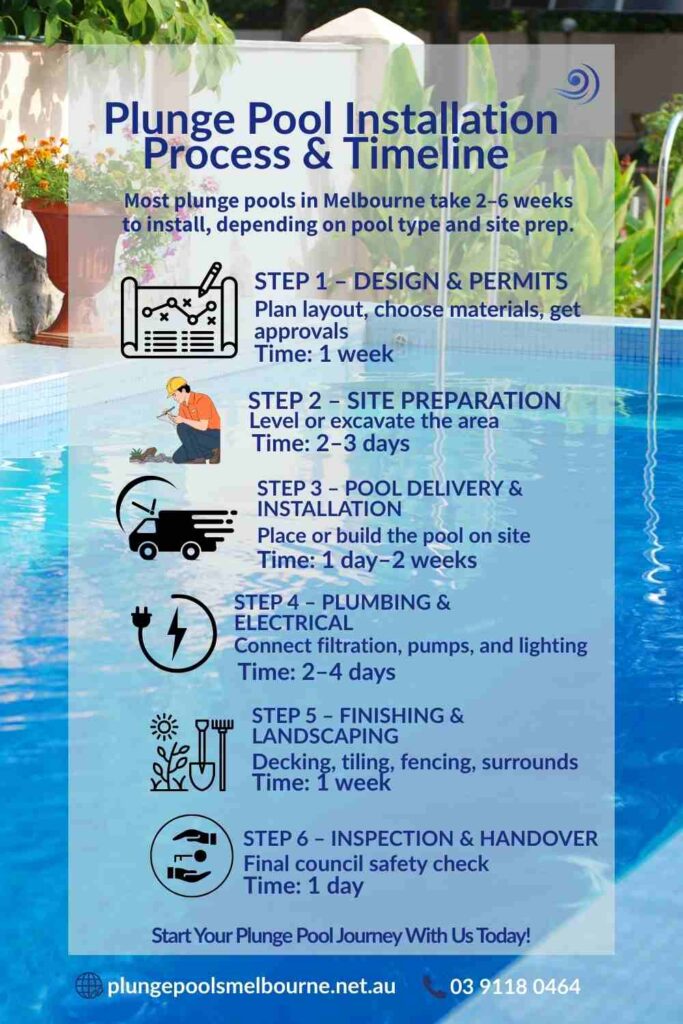
Plunge Pool Installation Process & Timeline
The process of installing a plunge pool may seem complex, but it follows a clear path, much like the way the universe forms stars step by step. Each stage has its own purpose, and each one builds on the stage before it.
Step 1: Design & Permits (Time: ~1 week)
The journey begins with design and permits. This is the thinking stage, the moment when your ideas take shape on paper. Plans are drawn, materials are chosen, and approvals are gathered. Without this step, nothing can begin, the same way a star cannot form without dust coming together.
What happens during this step:
- Choose your plunge pool size, shape, and material
- Plan the placement of the pool for sun, shade, and access
- Prepare engineering drawings if needed
- Apply for a building permit
- Submit site plans and pool barrier details
- Receive written approval from a registered building surveyor
Step 2: Site Preparation (Time: 2–3 days)
Next comes site preparation, where the land is shaped to hold the pool. Earth is removed, the ground is levelled, and the space is prepared. This is like forming the space where your pool will live, carving out a place for something new.
What happens during this step:
- Mark out the exact pool location
- Level the ground
- Excavate the area to the correct depth
- Remove soil and rubble from the property
- Prepare drainage or bedding material
Step 3: Pool Delivery & Installation (Time: 1 day–2 weeks)
When the pool is delivered or built, the project becomes real. A fibreglass or pre-cast plunge pool is lowered gently into its place, almost like a spacecraft landing in orbit. A concrete pool is built slowly from the inside, layer by layer, until it becomes strong enough to last for decades.
For Fibreglass or Pre-Cast Pools:
- Delivered by truck
- Lifted into place using a crane (if needed)
- Positioned, levelled, and backfilled
For Custom Concrete Pools:
- Formwork and steel reinforcement installed
- Concrete sprayed and shaped on-site
- Longer curing time required (up to 28 days before finishing)
Step 4: Plumbing & Electrical (Time: 2–4 days)
Plumbing and electrical work bring the pool to life. Pumps, pipes, and lights become the systems that make the water move and glow, a small ecosystem built for comfort and calm.
What happens during this step:
- Connect pumps and filtration
- Set up plumbing lines
- Install electrical wiring
- Add lighting, heaters, or jets
- Test water flow and pump operation
Step 5: Finishing & Landscaping (Time: ~1 week)
Then the surroundings are shaped. Decking, paving, tiling, and fencing create the landscape around the pool, just as planets form environments that shape how life might one day grow.
Typical finishing tasks:
- Decking or paving
- Coping tiles around the pool edge
- Fencing installation (mandatory before filling the pool)
- Garden beds, turf, or outdoor lighting
- Surround drainage improvements
Step 6: Final Inspection & Handover (Time: 1 day)
In the final stage, an inspector checks everything. Safety, structure, and compliance come together to ensure your pool is ready. Once it passes, the plunge pool becomes a peaceful place where you can cool off, relax, and enjoy the changing seasons of Melbourne.
Final checks include:
- Fence height and gate compliance (AS1926.1)
- Barrier gaps, latch direction, hinge spacing
- Electrical safety
- Structural checks and water depth confirmation
The whole process may take a few weeks, but each step is necessary. Together, they turn an empty space into a private retreat, your own small world of water.
Council and Permit Requirements in Melbourne
The rules for building a plunge pool in Melbourne may seem complex, but they follow a clear order, much like the laws that guide planets and stars. These rules exist to protect people, just as natural laws protect the balance of the universe.
Building Permits
In Victoria, a plunge pool is treated the same as a full swimming pool. This means you need a building permit, a safe pool barrier, and a final inspection before the pool can be used. A registered surveyor checks the plans and approves the design, the same way an astronomer checks the orbit of a new satellite.
Pool Barrier Requirements
The pool barrier rules, known as AS1926.1, act like the safety boundaries of a planet. They set the height of the fence, the strength of the gate, and the gaps allowed between panels. These rules make sure children cannot enter the pool area without supervision. Without these standards, the system would lose its balance.
Victorian Building Authority (VBA) Rules
The Victorian Building Authority, or VBA, watches over all pools and spas. They require homeowners to register their plunge pool, keep the barrier safe, and submit certificates every few years. These steps keep the pool safe long after the installation is done.
Permit & Approval Timeline
Approval takes time. A building permit may take one to three weeks, and the final inspections happen once the pool and barrier are ready. Sometimes the land itself adds challenges like clay soil, slopes, and old pipes can all change the plan, just as gravity changes the motion of galaxies.
Required Certificates & Documentation
Before the project is complete, homeowners must obtain:
- Building Permit
- Plumbing Compliance Certificate
- Electrical Safety Certificate
- Pool Barrier Compliance (Form 23)
- Final Certificate of Compliance (Form 17)
These documents confirm the plunge pool meets all Victorian legal requirements.
Extra Requirements for Special Sites
Some properties may need additional reports:
- Engineering assessment for reactive clay soil
- Land stability report for sloped blocks
- Drainage design to manage overflow
- Stormwater compliance
- Build-over easement approval (if applicable)
These are common in suburbs with older pipes, narrow lots, or difficult ground conditions.
Who Handles the Permits?
Most professional pool builders manage the entire process, including:
- Plans
- Engineering
- Lodgement
- Council communication
- Safety inspections
This reduces delays and ensures compliance with VBA and AS1926.1 rules.
Maintaining a Plunge Pool in Victoria’s Climate
Looking after a plunge pool is a bit like keeping a small planet in balance. Everything works well when the water, the chemicals, and the movement stay in harmony. Because a plunge pool is small, it needs less energy and fewer chemicals, just as a small world needs less force to keep its orbit.
Weekly care:
Each week, you test the water, clean the baskets, and let the pump run. These simple actions keep the pool clear. In Melbourne, the water can be soft or slightly hard, so the pH may change faster. This is normal. The water reacts to the world around it, just as planets react to gravity.
Seasonal care:
The seasons also play a role. In summer, heat and sunlight cause the chlorine to fade, so you clean more and run the pump longer. In autumn, falling leaves change the water the way dust changes the light of stars. In winter, you can slow everything down. The pump runs less, the heater works only when needed, and the pool rests under its cover.
Heating & Heat Pumps:
A heat pump is especially helpful in Victoria. Because the pool is small, the heat spreads quickly, like warmth filling a small room. Running it during the warmest part of the day saves energy and keeps the water comfortable.
Design and Customisation Options for Melbourne Plunge Pools
A plunge pool can be designed in many ways to match your home, backyard size, and lifestyle. Because plunge pools are compact, even small design choices make a big visual impact. Melbourne homeowners often choose modern, minimalist styles with clean lines, smooth finishes, and practical features.
Pool Shapes & Layouts
The shape of the pool is the first decision. A rectangle looks modern and straight, like the path of light. A square fits into small spaces. A round pool feels softer, like the curve of a planet. And a custom shape bends to the land around it, the way gravity bends space.
Interior Finish & Tile Choices
Your interior finish changes the water colour and overall mood.
Popular interior finishes:
- Fibreglass gelcoat (blue, white, grey)
- Tiled interior (premium look)
- Pebble or aggregate (concrete pools)
- Rendered interiors
Tile options:
- Glass mosaic tiles – luxury, glossy finish
- Porcelain tiles – durable, modern matte look
- Stone tiles – natural, earthy feel
Tile colour affects the final water colour, light tiles look bright and blue, while dark tiles create a deep, lagoon-style look.
Coping Types (Pool Edge Finish)
Pool coping creates the frame around your plunge pool.
Popular Melbourne coping options:
- Stone coping (travertine, bluestone, granite)
- Concrete coping
- Porcelain coping tiles
- Timber-look coping (slip-resistant composite)
- Square edge or bullnose profiles
Coping plays a big role in safety, durability, and the final style of the pool area.
Heating Options
Heating is extremely common in Melbourne due to cooler temperatures.
Heating choices:
- Inverter heat pump: most efficient option
- Electric heater: fast heat-up, higher running cost
- Gas heating: great for quick heating
- Solar heating: eco-friendly, low running cost
- Thermal pool cover: keeps warmth in
Most plunge pools heat up quickly because of their small water volume.
Lighting Options
Lighting adds mood, safety, and night-time usability.
Common lighting upgrades:
- LED underwater lights
- Colour-changing RGB lights
- Garden and pathway lights
- Step and bench lights
- Wall-mounted landscape lights
Good lighting helps your plunge pool look stunning at night.
Pool Features & Built-In Elements
These features make your plunge pool more comfortable:
- Bench seating
- Wide entry steps
- Hydrotherapy jets
- Swim jets (resistance system)
- Waterfalls or water walls
- Glass panels or glass edges
- Smart pool controls
Built-in seating is especially popular for relaxing and entertaining.
Surrounds & Landscaping
Your plunge pool looks best when the surrounding area matches the home’s style.
Popular surrounding choices:
- Timber decking
- Stone pavers
- Concrete surrounds
- Artificial turf
- Native plants and palm-style gardens
- Glass pool fencing
- Black aluminium fencing
Landscaping often completes the entire outdoor space and boosts property value.
Common Mistakes and Risks
Building a plunge pool may look simple, but mistakes can cause problems that spread out like ripples in space. When one step is missed, everything after it changes course.
1. Skipping Permits or Applying Too Late
The biggest mistake is skipping permits. In Victoria, permits are like the natural laws of the universe, you cannot ignore them. Without them, the project stops, and the whole timeline bends out of shape.
2. Not Checking Soil Type (Big Problem in Melbourne)
Soil is another silent force. Melbourne’s clay expands and shrinks with the seasons, the way stars expand and contract with heat. If the soil is not tested, the pool may shift, crack, or settle the wrong way. Good builders always study the ground before they build.
3. Poor Drainage Around the Pool
Drainage works the same way. Water must have somewhere to go, or it builds up like pressure in a closed system. Without drains, the soil softens, the pool moves, and the land becomes unstable.
4. Ignoring Access Restrictions
Access is often forgotten, but it matters. A fibreglass or pre-cast pool is lowered into place like a spacecraft finding its orbit. If the crane cannot reach the backyard, the cost rises or the project stops.
5. Over-Customising Without Planning the Budget
Even design choices can cause issues. A pool that is too big takes over the yard, the same way a large planet changes the gravity around it. Over-customising adds weight to the budget until it bursts.
6. Poor Maintenance After Handover
And when the pool is finished, it needs care. Simple weekly jobs like testing water, brushing walls, running the pump, keep the system balanced. Without them, algae grows the way dust gathers in space.
Takeaway: Good planning and qualified installers prevent 80% of pool-related issues.
Conclusion
A plunge pool is one of the best ways to enjoy a relaxing outdoor space in a small Melbourne backyard. It gives you the comfort of a swimming pool without the high cost, long build time, or big maintenance needs.
With the right design, heating system, and builder, a plunge pool becomes a beautiful spot to cool off, unwind, and spend time with family. It can lift the value of your home, make your outdoor area more enjoyable, and give you a private retreat you can use all year.
If you’re ready to start planning, Plunge Pools Melbourne can guide you from the first design idea to the final handover. We help with permits, installation, and custom features so your pool fits your home and lifestyle perfectly.
Contact our team today for a free site check and a personalised quote.
FAQs
Can you install a plunge pool indoors or under a patio in Melbourne homes?
Yes, Indoor or covered installations work well with proper waterproofing, drainage, and ventilation. Many Melbourne homeowners choose indoor plunge pools for privacy and year-round use with heating.
How does Melbourne’s clay soil or slope affect plunge pool installation?
Clay soil or sloped blocks need reinforced bases and drainage systems to prevent movement. Builders often use retaining walls or semi-inground designs to ensure stable installation.
What are the energy-efficient heating options for small plunge pools?
Solar heating and inverter heat pumps are the most efficient. Solar panels capture Melbourne’s sunlight, while inverter pumps adjust output to save power. Pool covers also help retain warmth.
Are there government rebates or incentives for installing eco-friendly pools in Victoria?
Direct pool rebates are rare, but the Victorian Solar Homes Program may cover solar panels or heat pumps used for pool heating. Check the latest Sustainability Victoria updates before installation.
How do plunge pool designs adapt for older homeowners or accessibility needs?
Wide steps, shallow ledges, and handrails improve safety and accessibility. Many Melbourne builders also include bench seating and non-slip surfaces for easier, safer entry.